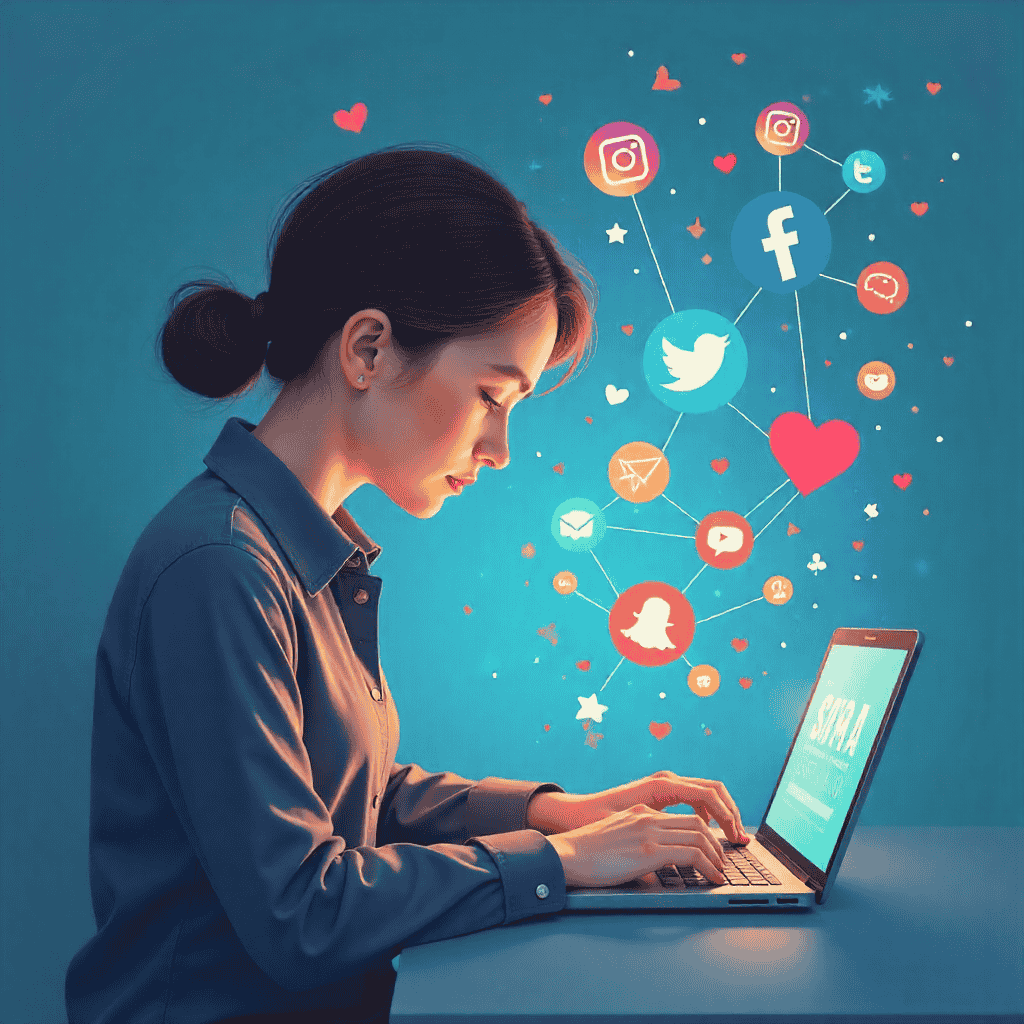
Social Media and Mental Health A Critical Connection
In today’s digital world, social media and mental health are closely linked. Studies reveal that the effects of social media on mental health can be both positive and negative. On one hand, the positive effects of social media include global communication, educational opportunities, and emotional support. On the other hand, the negative effects of social media such as addiction, social media anxiety and depression, cyberbullying, and poor sleep quality are becoming more common.

Understanding the impact of social media on mental health is crucial for people of all ages. From teenagers spending long hours online to professionals constantly scrolling through feeds, excessive use can lead to serious mental health challenges. To strike a healthy balance, we must identify harmful patterns and practice mindful usage.
Positive Effects of Social Media
Better Connection and Communication
One of the most powerful positive effects of social media is connectivity. Families living in different countries can stay in touch instantly. Friends can share updates in real time, and professionals can network globally. This level of communication reduces feelings of loneliness and improves emotional bonding.
Awareness and Education
Social media platforms spread information faster than ever before. Health tips, motivational quotes, and awareness campaigns help users stay informed. Many mental health organizations run pages dedicated to spreading awareness about anxiety, depression, and stress management. For those seeking knowledge, these platforms act as free learning hubs.
Support Communities
Negative Effects of Social Media
While social media connects people, it also fuels constant comparison. Seeing others’ “perfect lives” often creates jealousy and feelings of inadequacy. Over time, this can result in anxiety, depression, and low self-esteem. Teenagers and young adults are most vulnerable to this effect.
Sleep Disorders
Late night scrolling has become a habit for many users. Blue light from screens disturbs sleep patterns, and irregular sleep weakens mental health. Poor sleep increases irritability, reduces focus, and may worsen conditions like depression.
Cyberbullying and Negativity
One of the most harmful negative effects of social media is cyberbullying. Insults, trolling, and online harassment cause emotional distress. Victims of cyberbullying often experience fear, anxiety, and in severe cases, trauma. The lack of accountability online makes this problem widespread.
How to Balance Social Media and Mental Health
- Set Screen Time Limits: Restrict daily social media use to 1,2 hours.
- Follow Positive Content: Choose accounts that share motivational and educational posts.
- Engage in Offline Activities: Exercise, reading, and spending time outdoors boost mental health.
- Take Digital Detox: Plan at least one social media–free day every week.
- Mindful Usage: Use social media as a tool, not as an escape from real life problems.
Conclusion
The impact of social media on mental health cannot be ignored. While it offers valuable opportunities for connection and awareness, overuse can lead to social media anxiety and depression, poor sleep, and low self-esteem. A mindful approach focusing on positive content, limiting screen time, and staying active offline ensures that social media becomes a source of growth rather than stress.